

Jesus to Mary Magdalene: “Whom are you looking for?”
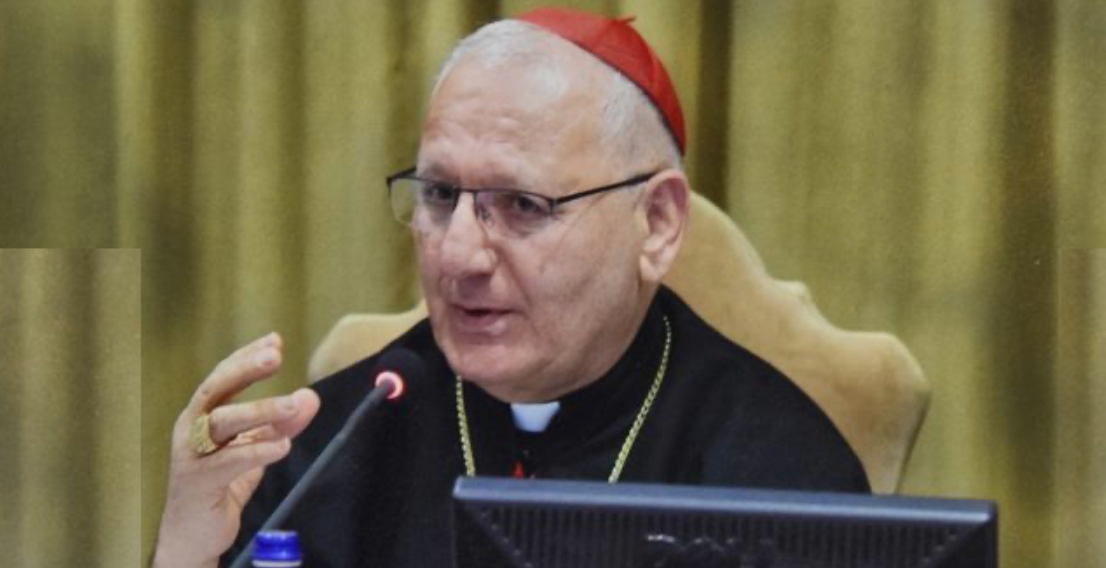
Cardinal Louis Raphael Sako
Jesus asks Mary Magdalene and us an existential question: Whom are you looking for?
A human being seeks by nature, the one he or she loves, the one who completes him/ her “we rejoice in him and he rejoices in us” (Sunday morning hymn in the Chaldean liturgy).
Likewise, a believer seeks someone who reveals to him a great purpose that fulfils his existence and leads him to the fullness of life.. The Resurrection is every person’s hope. Christ’s Resurrection is the pledge of our resurrection. The resurrection does not concern his soul according to the philosophical dualism of body and soul, but the whole person that have been given to become.
The Gospel of Easter (John 20:11–18) presents a wonderful example of this search-have passion, through Mary Magdalene:
“Mary stood outside the tomb weeping. As she wept, she bent over into the tomb and saw two angels in white seated where Jesus’ body had been, one at the head and the other at the foot… Then she turned around and saw Jesus standing there, but she did not realize that it was Jesus. He said to her, ‘Woman, why are you weeping? Whom are you seeking?’ … Thinking he was the gardener, she said, ‘Sir, if you have carried him away, tell me where you have put him, and I will take him.’ Jesus said to her, ‘Mary.’ She turned toward him and cried out in Hebrew, ‘Rabbouni!’ (Which means Lord). Jesus said, ‘Do not hold on to me, for I have not yet ascended to the Father. Go instead to my brothers and tell them: I am ascending to my Father and your Father, to my God and your God.’ Mary Magdalene went to the disciples with the news: ‘I have seen the Lord!’ And she told them that he had said these things to her.”
Mary Magdalene, who represents all the women disciples, in the silence of her being, her heart, her prayer, her pain, her tears, and her hope, went searching for the fate of the one she loved, and the one who had been her light in granting her faith, which came alive in her heart.
Mary embodied her loyalty by searching diligently for him with her soul, teaching us fidelity, something that, unfortunately, is not in high demand in our society. What is common is self-interest.
Mary hurried to the tomb early and saw two angels at the tomb, then turned and saw Jesus standing there, but thought he was the gardener. She said, “Sir, if you have taken him away, tell me where you have put him, and I will go and take him”.
Jesus surprises her face to face through his voice when he calls her by her personal name: “Mary,” not “woman.” Immediately, in astonishment, she responds: “Rabbouni!”—“my Lord”. Her tears are transformed into overwhelming joy when she realizes that the one she longed for is alive before her; death has not conquered him.
In the fullness of her joy, Mary instinctively tries to embrace him, but no; Jesus is in a new state and cannot be touched, because the relationship after his resurrection is a relationship of faith and spirituality of Easter. Here, he points to a new form of relationship between himself and his disciples and the Christian community, based on divine communion: “What we have seen and heard we proclaim to you, so that you also may have fellowship with us” (1 John 1:3). This fellowship is founded on his Resurrection.Death is not the end, buy a passage to sanother being.
After this intimate dialogue, Jesus entrusts her with the mission of announcing the joyful event to his disciples: “Go to my brothers and tell them: I am ascending to my Father and your Father, to my God and your God” (20:17).
The Gospel of John presents Mary as the first disciple to encounter the risen Lord and the first announcer of the Resurrection. Thus, the woman is a bearer of the Gospel and a proclaimer of Christ alongside man, being more connected to intuition, emotions, and inner life.. Christianity has never believed in the inferiority of women, nor that they are deficient in mind or faith; rather, it affirms that they share equal dignity, that both are made in the image of God, and that what distinguishes a person is their behaviour and their work.
The event of the Resurrection, by its nature, raises a certain degree of difficulty in belief and misunderstanding. For example, the disciples of Emmaus, the testimony of Mary Magdalene, the women, the appearances to the disciples, and Thomas’s : “Unless I see the mark of the nails in his hands, and put my finger into the place of the nails, and put my hand into his side, I will not believe” (John 20:25). Thus, the Resurrection is a new calling, a new belonging, new relationships, and a new communion—through walking toward resurrection, life, and renewal..
The question posed to each one of us is: Do we fully realize that we must journey together as a community further onward, along the path of life—which sometimes passes through deserts and dark nights (difficulties), as part of our new birth? Surely, God ultimately surprises us, as he surprised Mary, the women, and the disciples through his appearances.
The Resurrection of Christ affirms that love and truth will ultimately triumph, no matter how harsh evil may seem.
With best wishes for a blessed Easter to you, your families, and our country—for freedom, dignity, peace, and stability.
We find a deep echo of this scene in the Resurrection hymn: “O gardener, how beautiful is your garden; in it a tomb adorned like a bridal chamber. Guards stand over the tomb, and angels surround it. Blessed are you, Mary, for you call me ‘gardener.’?”
